Vacation Rental Host Mistakes That Always End in Bad Reviews
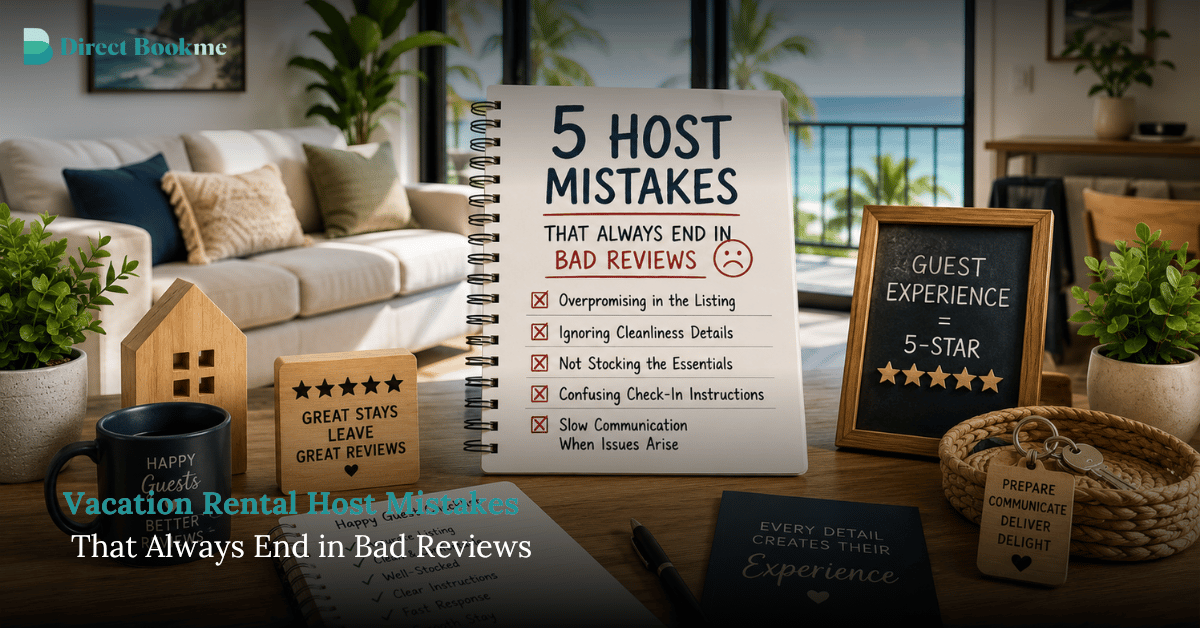
Vacation rental host mistakes can turn a promising guest stay into a negative review, even when the property itself is beautiful. Most bad reviews do not happen because guests are impossible to please. They often happen because expectations were unclear, essentials were missing, communication felt slow, or small problems were not handled professionally.
For vacation rental owners, reviews matter because they influence trust, visibility, and booking decisions. A guest may love the location, photos, or design, but if the experience feels disorganized, the review can reflect that frustration.
The good news is that many negative reviews are preventable. Hosts can protect the guest experience by focusing on clear communication, accurate listings, consistent maintenance, thoughtful amenities, and direct relationships with travelers.
Why Vacation Rental Host Mistakes Matter
Guests do not only review the property. They review the full experience.
That includes the booking process, check-in instructions, cleanliness, amenities, communication, house rules, maintenance, and how problems are handled during the stay.
A small issue can become a bad review when the guest feels ignored or misled. For example, a missing towel may not ruin a stay by itself. But if the host takes too long to respond or the listing promised “fully stocked essentials,” the situation can feel bigger.
Avoiding common host mistakes can help:
- Improve guest satisfaction
- Reduce complaints
- Protect your online reputation
- Increase repeat bookings
- Support direct booking trust
- Improve listing performance
- Create a more professional guest experience
This is also where direct communication becomes valuable. One of the main benefits of booking direct with hosts is the ability to set expectations clearly, answer questions before arrival, and build trust without unnecessary intermediaries.
Join our platform and connect with guests without intermediaries

Mistake 1: Overpromising in the Listing
One of the fastest ways to create a bad review is to make the property sound better, larger, newer, quieter, or more convenient than it really is.
Guests do not expect every rental to be perfect. But they do expect the listing to be honest.
Common overpromising mistakes include:
- Calling a small space “spacious”
- Describing an older bathroom as “luxury”
- Saying the rental is “steps from the beach” when it requires a drive
- Hiding stairs, noise, parking limits, or shared spaces
- Using outdated photos
- Listing amenities that are not consistently available
- Making the property sound private when outdoor areas are shared
Overpromising may help get the booking, but it creates disappointment during the stay.
A better approach is to describe the property clearly and confidently. Highlight the strengths, but be transparent about limitations.
For example, instead of saying:
“This is a luxury bathroom with a spa-like feel.”
Say:
“The bathroom is clean, bright, and stocked with fresh towels, toiletries, and practical guest essentials.”
This manages expectations while still positioning the property positively.
Guests appreciate honesty. A property does not need to be perfect to earn a strong review, but it does need to match what was promised.
Mistake 2: Ignoring Cleanliness Details
Cleanliness is one of the most important parts of the vacation rental experience. Even small missed details can make guests question the entire property.
A rental can have beautiful furniture, modern decor, and great views, but if guests find hair in the bathroom, crumbs in the kitchen, stained towels, or dusty surfaces, the stay immediately feels less professional.
Common cleanliness mistakes include:
- Dirty mirrors
- Hair in showers or sinks
- Stained linens
- Dust under furniture
- Greasy kitchen surfaces
- Leftover food in the refrigerator
- Trash not fully removed
- Dirty outdoor furniture
- Pet hair in supposedly clean spaces
- Used toiletries left behind
Cleanliness should be part of a repeatable turnover system. Hosts should not rely only on memory. A detailed short-term rental ownership checklist can help ensure each stay begins with the same standard.
Cleaning teams should also know what matters most to guests. Bathrooms, kitchens, bedding, floors, and high-touch surfaces deserve extra attention.
A guest may forgive an older countertop. They are much less likely to forgive a bathroom that does not feel freshly cleaned.
Mistake 3: Not Stocking the Essentials Guests Expect
Missing essentials can create frustration fast, especially when guests arrive late, travel with children, or plan a longer stay.
Guests expect the rental to support basic daily needs. They should not have to immediately shop for toilet paper, dish soap, trash bags, coffee filters, or enough towels.
Common missing essentials include:
- Toilet paper
- Hand soap
- Shampoo and body wash
- Trash bags
- Paper towels
- Dish soap
- Sponge or cleaning cloth
- Laundry detergent when laundry is available
- Coffee basics
- Enough dishes and cutlery
- Cooking tools
- Extra towels
- Hair dryer
- Hangers
- Wi-Fi instructions
Bathrooms and kitchens are especially important. A poorly stocked bathroom can make the property feel cheap or careless. A poorly equipped kitchen can make the stay inconvenient for families, groups, and long-stay guests.
That is why hosts should review both vacation rental bathroom ideas and vacation rental kitchen essentials when improving the guest experience.
The goal is not to provide everything a guest could possibly want. The goal is to provide the essentials that make the stay feel easy, prepared, and comfortable.
Mistake 4: Sending Confusing Check-In Instructions
Check-in sets the tone for the entire stay.
If guests cannot find the property, unlock the door, park correctly, or understand where to go, they may arrive already frustrated. This frustration can influence how they experience the rest of the stay.
Common check-in mistakes include:
- Sending instructions too late
- Using unclear directions
- Not explaining parking
- Missing access codes
- Providing outdated lockbox information
- Not mentioning building entry steps
- Forgetting Wi-Fi details
- Making guests search through multiple messages
- Not explaining what to do if something goes wrong
Check-in instructions should be simple, organized, and easy to read from a phone.
A strong check-in message may include:
- Property address or arrival location
- Parking instructions
- Entry code or lockbox steps
- Wi-Fi name and password
- Important house rules
- Host contact information
- Emergency instructions
- Checkout reminder
If your property has anything that could confuse a guest, explain it before arrival. This could include a hidden driveway, shared entrance, gate code, elevator access, building number, or unusual parking rule.
Clear communication helps prevent stress before it becomes a review issue.
Mistake 5: Responding Too Slowly When Something Goes Wrong
Problems happen in vacation rentals.
A guest may report a broken appliance, missing item, Wi-Fi issue, clogged drain, noise concern, or cleanliness problem. The issue itself does not always lead to a bad review. The host’s response often matters more.
Guests want to feel heard.
Slow, defensive, or vague replies can make a small issue feel much worse.
Better responses are:
- Fast
- Calm
- Clear
- Solution-focused
- Polite
- Specific about next steps
For example, instead of saying:
“That should not be happening.”
Say:
“Thanks for letting me know. I’m sorry about that. I’m checking with our maintenance contact now and will update you shortly with the next step.”
Even if the problem cannot be fixed immediately, communication helps. Guests are more patient when they know the host is taking action.
Hosts can also use AI tools for a vacation rental business to organize response templates, maintenance workflows, cleaning checklists, and guest communication systems.
Automation can help hosts respond faster, but messages should still feel human. Guests want efficiency, not robotic replies.
Mistake 6: Having Rules That Feel Harsh or Unclear
House rules are important, but the way they are written matters.
Rules that sound aggressive can make guests feel unwelcome before they even arrive. Rules that are vague can lead to misunderstandings.
Common rule mistakes include:
- Too many warnings
- Excessive capitalization
- Threatening language
- Unclear pet policies
- Hidden fees
- Confusing checkout tasks
- Strict rules that were not shown before booking
- Rules that conflict with the listing description
Instead of writing rules like a list of punishments, write them as simple expectations.
For example:
“Please keep noise low after 10 p.m. to respect our neighbors.”
This is better than:
“NO LOUD NOISE AFTER 10 P.M. OR YOU WILL BE CHARGED.”
The first version is clear and respectful. The second version may feel hostile.
Rules should protect the property while still making guests feel welcome. This is especially important for pet-friendly stays, where guests need to understand expectations around furniture, waste, fees, outdoor areas, and unattended pets.
A clear pet-friendly vacation rental policy can prevent misunderstandings and help guests feel more confident before booking.
Mistake 7: Asking for Reviews the Wrong Way
Reviews are important, but asking for them incorrectly can damage trust.
Hosts should never pressure guests, offer incentives for positive reviews, or make guests feel uncomfortable. A good review request should be polite, simple, and honest.
A better approach is to ask for feedback after a good stay and make the message feel natural.
For example:
“Thank you again for staying with us. If you enjoyed your visit, we would really appreciate an honest review. It helps future guests know what to expect and helps us continue improving the property.”
This does not sound pushy. It also does not demand five stars or suggest that only positive feedback is welcome.
Hosts should also be careful with review practices. Official guidance on soliciting and paying for online reviews explains why review requests should be transparent and not misleading.
The best way to earn better reviews is not to pressure guests. It is to create a stay that feels organized, honest, clean, and thoughtfully managed.
Mistake 8: Ignoring Guest Feedback Patterns
Not every complaint means the host did something wrong. But repeated feedback should not be ignored.
If multiple guests mention the same issue, it is probably worth fixing.
Common patterns may include:
- “The kitchen needs more supplies”
- “The shower pressure was weak”
- “The checkout instructions were confusing”
- “The parking was hard to understand”
- “The towels felt old”
- “The Wi-Fi was slow”
- “The home was darker than expected”
- “The listing photos made it look bigger”
Patterns show where the property experience and guest expectations are not aligned.
Hosts should review feedback regularly and turn it into action. This may include updating the listing, replacing supplies, improving signage, changing photos, adjusting house rules, or adding a missing amenity.
Guest feedback can also help hosts understand how to attract more vacation rental guests by showing what different traveler types value most.
The hosts who improve fastest are usually the ones who treat reviews as information, not personal attacks.
Mistake 9: Not Using Direct Communication to Build Trust
Many bad reviews begin before the guest even arrives.
If a guest feels unsure, confused, or unsupported during the booking process, they may enter the stay with lower confidence. Direct communication helps solve this.
Hosts can use direct communication to:
- Answer specific questions
- Explain property limitations
- Clarify rules
- Confirm amenities
- Recommend local places
- Prepare guests for arrival
- Resolve concerns faster
- Create a more personal experience
This is one of the reasons direct booking matters. It gives hosts more control over the relationship, not just the reservation.
A strong vacation rental SEO strategy can help guests discover your property online, but clear communication helps turn that visibility into trust and bookings.
Guests are more likely to leave positive reviews when the experience feels clear from the first interaction to checkout.
How to Prevent Bad Vacation Rental Reviews
Preventing bad reviews is not about controlling what guests say. It is about creating a better, clearer, and more consistent stay.
Hosts can reduce negative reviews by focusing on:
- Accurate listings
- Clean spaces
- Stocked essentials
- Clear check-in instructions
- Fast responses
- Respectful rules
- Honest review requests
- Maintenance systems
- Guest feedback patterns
- Direct communication
The best hosts do not wait for complaints to fix problems. They build systems that prevent the same issues from happening again and again.
Booking your next vacation is easy and stress-free
Visit DirectBookMe.co and choose your destination
Explore listings and connect with verified hosts
Book with confidence — no commissions, no confusion
Whether you’re planning a long weekend or an extended stay, DirectBookMe makes direct booking the obvious choice.

List your property on Direct Bookme today and start attracting more direct bookings with full control and higher profits.
Vacation Rental Host Mistakes Are Preventable
Most vacation rental host mistakes come down to expectation gaps. Guests expected one thing and experienced another.
That gap can appear in the listing, photos, cleanliness, amenities, communication, rules, or checkout process.
When hosts close that gap, they create better stays.
A property does not need to be perfect to earn strong reviews. It needs to be honest, clean, functional, well-communicated, and thoughtfully managed.
Direct BookMe helps vacation rental owners connect with travelers more directly, build stronger guest relationships, and create a booking experience with more clarity, control, and trust.
For modern hosts, avoiding bad reviews is not only about protecting reputation. It is about creating a better guest experience from the first search to the final checkout.